
HARCut
A coding agent edits travel episodes, and a person signs off every stage
The problem
Finding the footage is only half of making an episode. Once HARchive could search years of travel video, the slow part was still the edit: choosing what the episode is about, laying out its story, picking the lines that carry it, then building the timeline by hand with its music, maps, captions and narration.
Each of those steps is a judgment call, and most of the work between the calls is mechanical. That split is common in any business that turns raw material into a finished piece:
- Training video: a course cut down from hours of recorded sessions.
- Marketing: a short highlight reel from a long event shoot.
- Reports: a client summary drafted from a project's notes and photos.
What was built
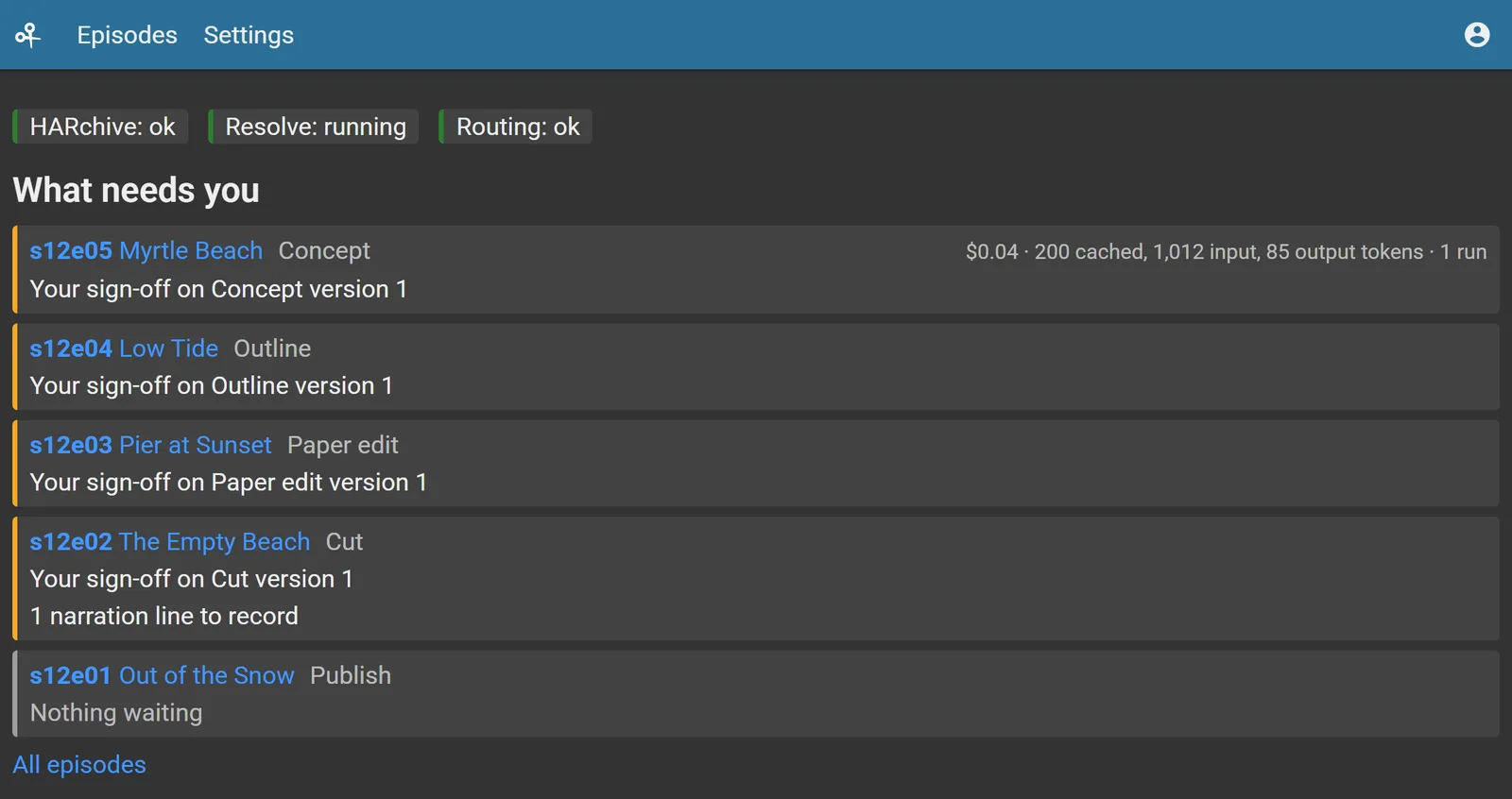
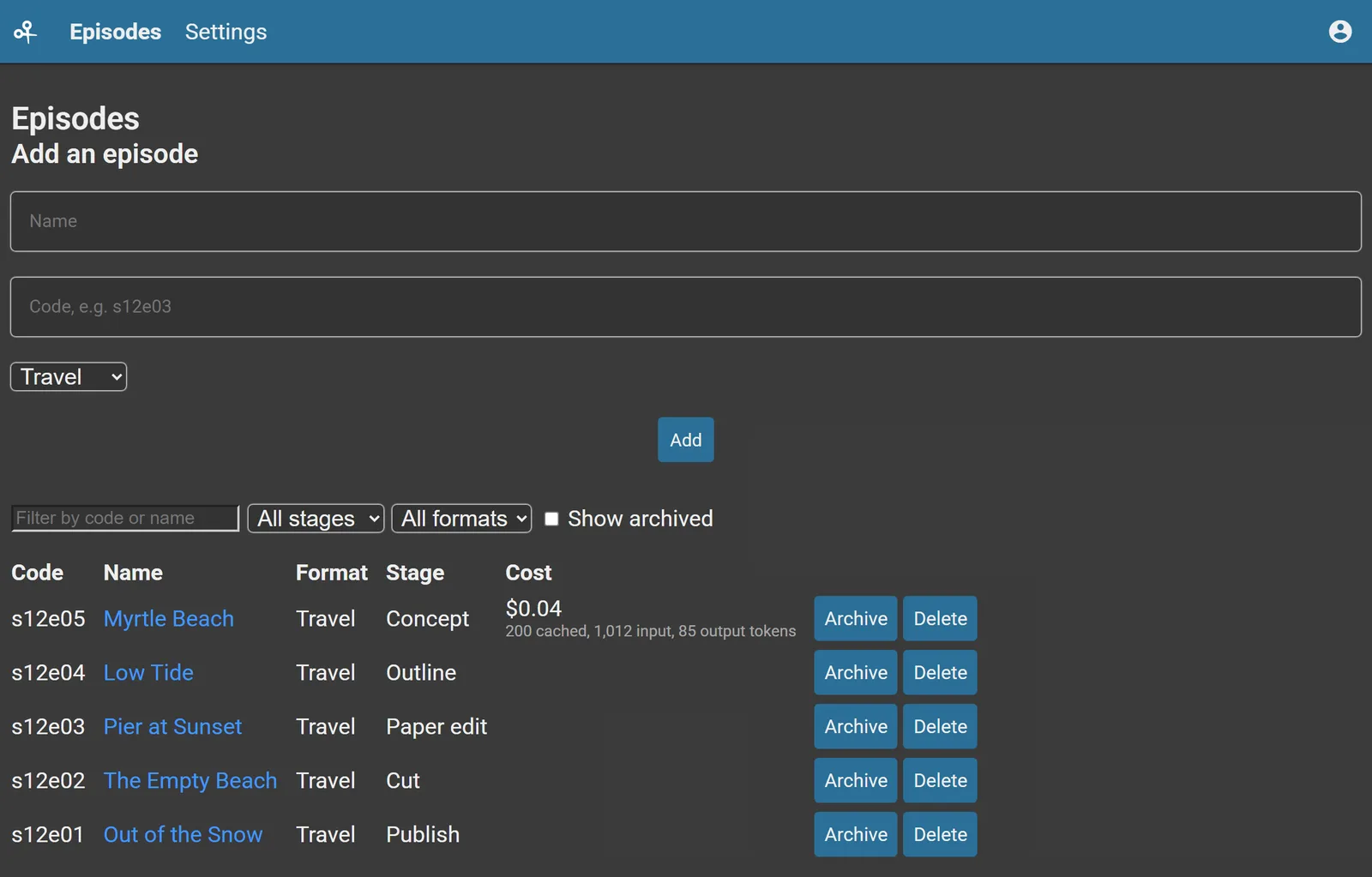
HARCut takes an episode of a travel channel through five stages: Concept, Outline, Paper edit, Cut and Publish. At each one a coding agent writes the stage's document, and a person reads it and approves it or sends it back with a note. Nothing moves on without that sign-off.
It edits from HARchive, the archive of the trip's footage, and hands its timelines to DaVinci Resolve, where the episode is finished.
Result
An episode goes from a trip to a timeline in Resolve with a person deciding at every stage and the agent doing the work between them. A message in a stage's chat starts the agent on the episode, and its work streams into the chat as it runs.
Every screen on this page is HARCut's demo data, made for these pictures, not a real episode.
The honest limits:
- It is built for one channel's way of editing, and its checks are that channel's habits.
- It works only with a HARchive archive and DaVinci Resolve.
- The agent's cut is a starting point. The finishing, and every call on taste, stay with the editor.
Effort and cost
HARCut was built by coding agents through WASBuilder, with me directing: 301 tickets on its board between 16 and 29 October 2026, all but two of them shipped.
Its agent runs on Claude Code, and every stage shows what its runs used, so the cost of an episode is known while it is being made, not after.
How it works
The rest of this page is the technical tour, one stage at a time.
Concept
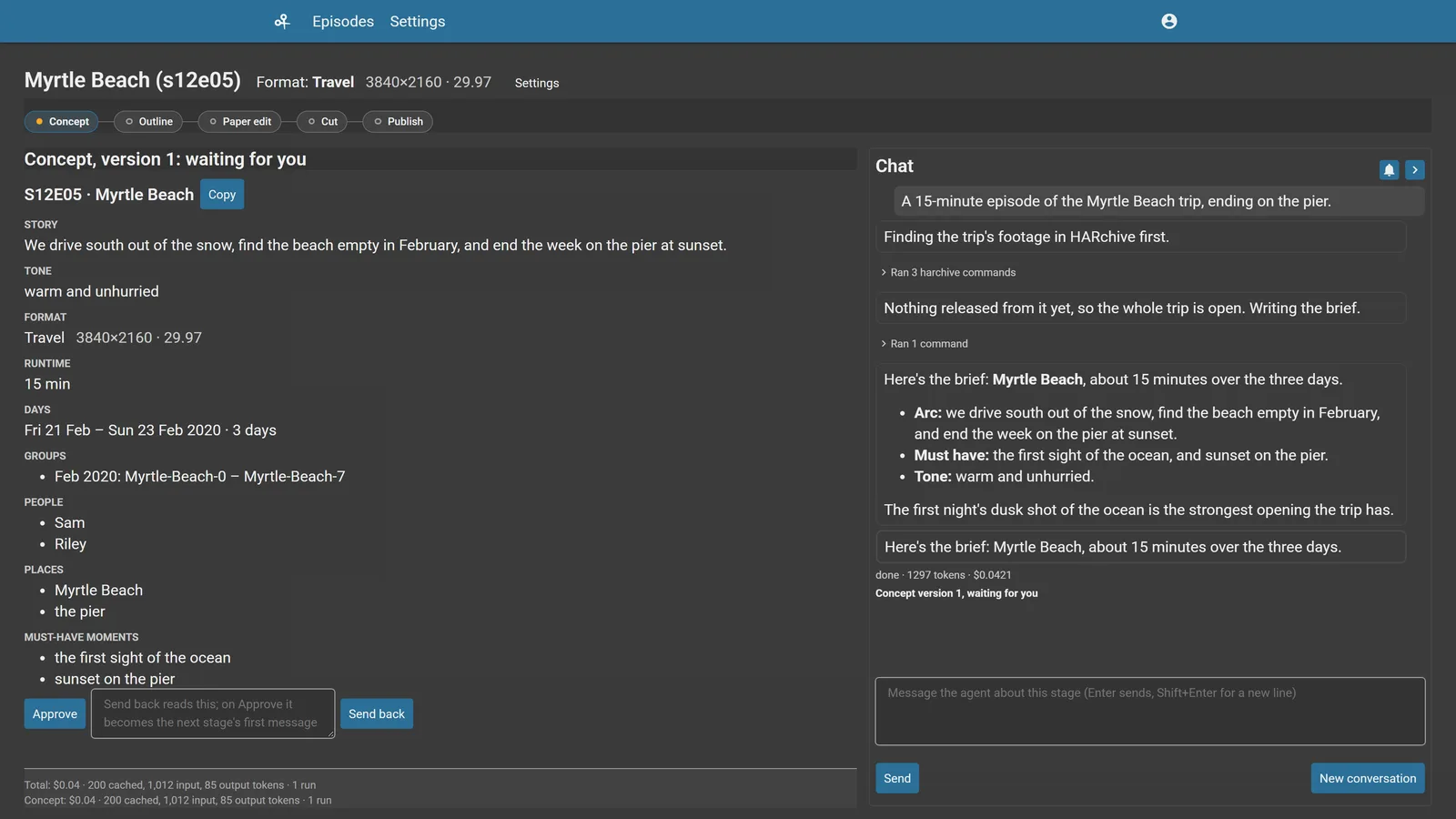
The agent reads the trip in HARchive and writes the brief: the story, its tone, the format and runtime, the days and footage it draws on, the people and places, and the moments it must have. Earlier releases from the same trip inform it.
Outline
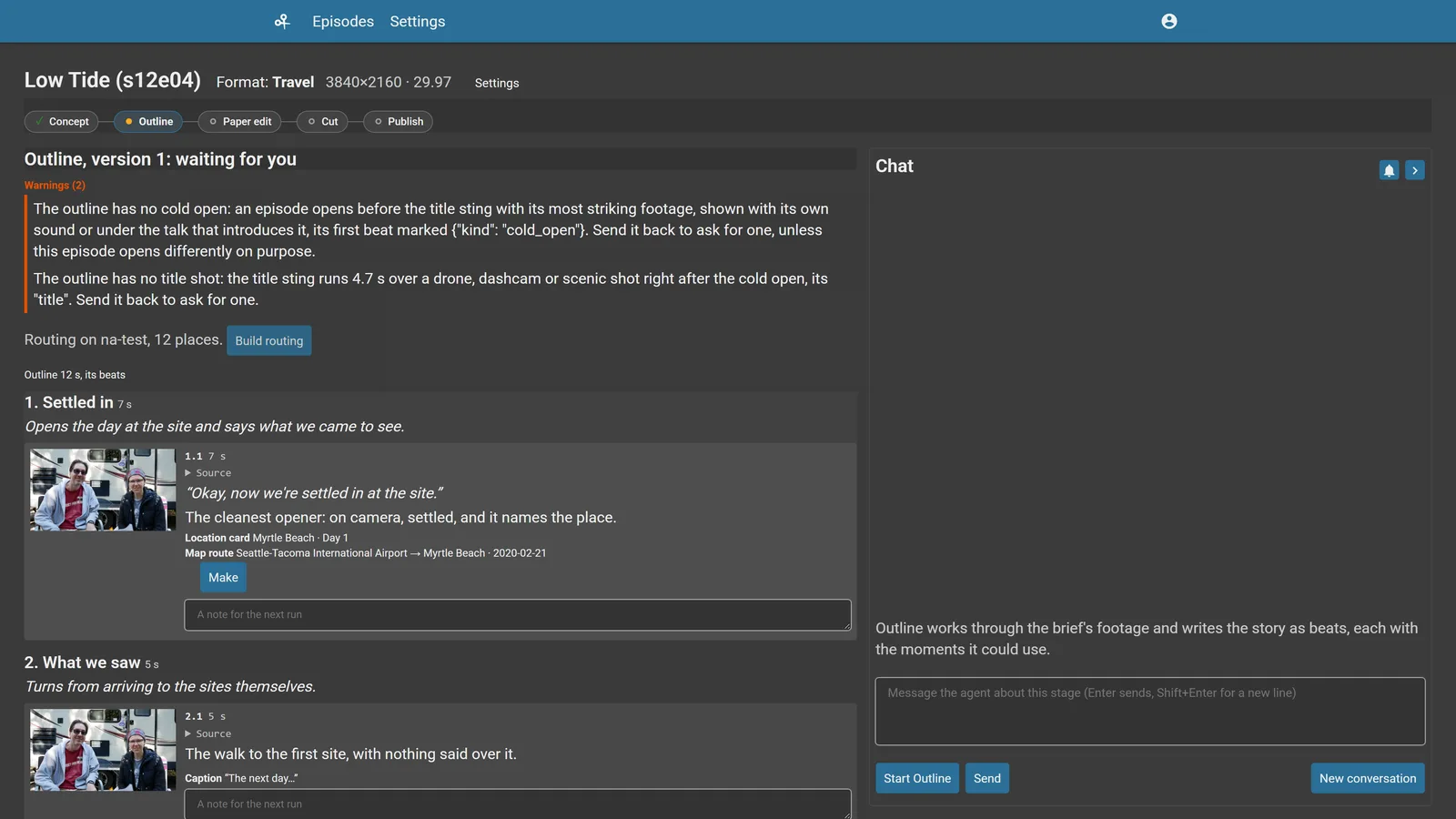
Outline turns the brief into beats, each with the moments it could use: a clip, what is said in it, and why it is there. It plans the graphics per beat too, location cards, map routes and captions, and warns when the story is missing a cold open or a title shot.
Paper edit
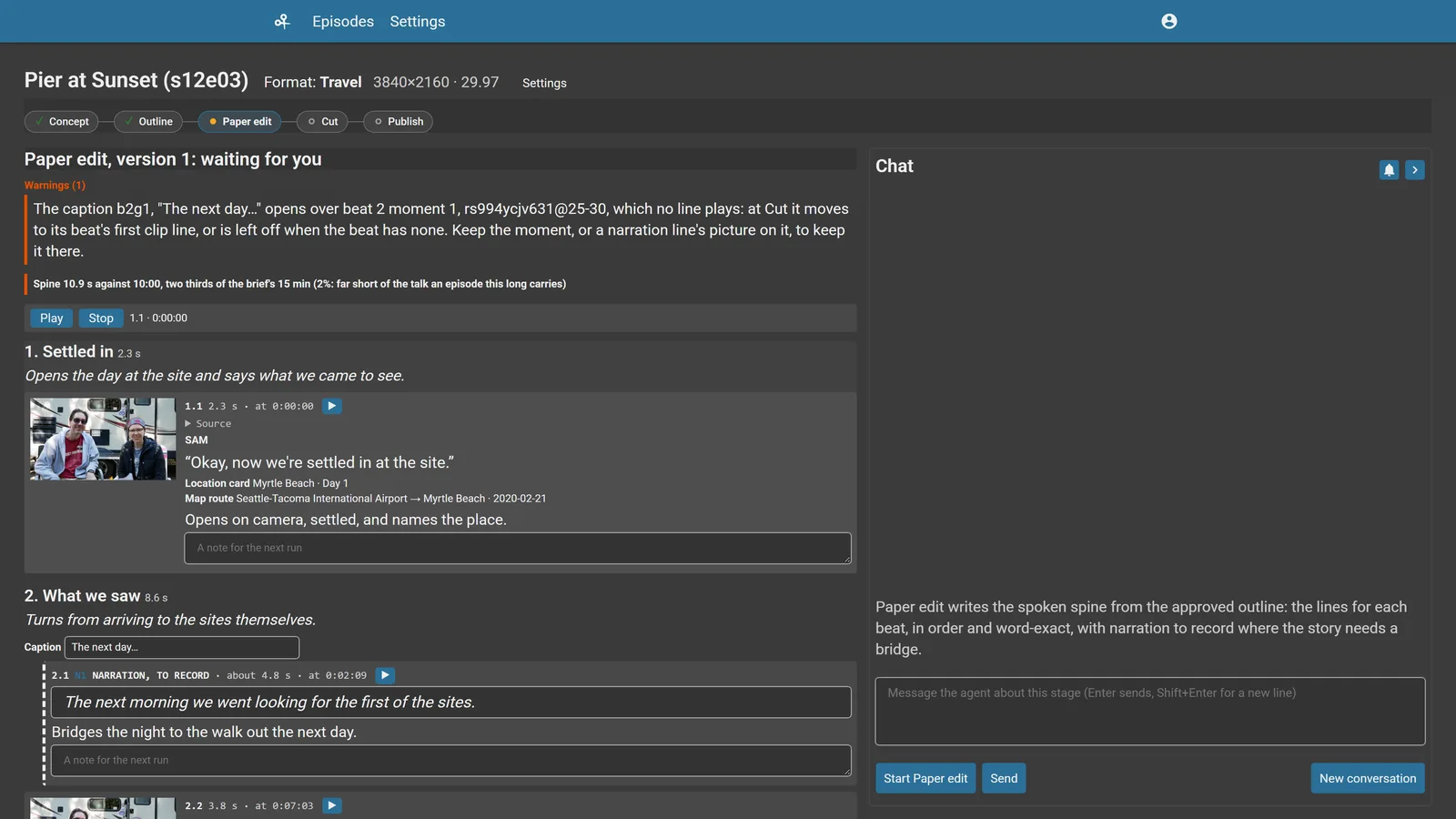
The paper edit is the spoken spine, written as a script: the lines for each beat, in order and word-exact, with narration to record where the story needs a bridge. It can be played through in the page before anything is cut.
Cut
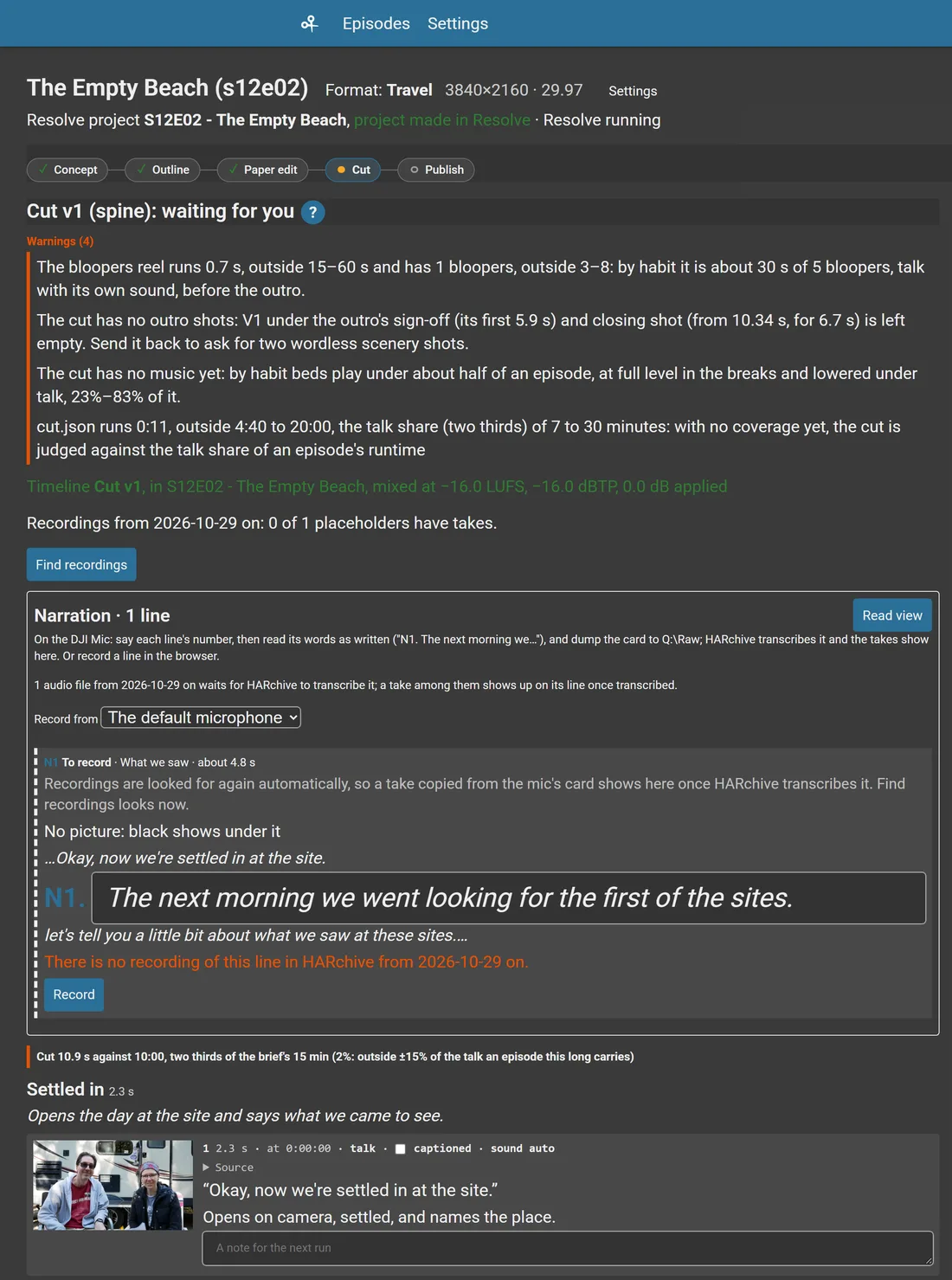
Approving the paper edit makes the first cut on the server, with no agent run: the spine, with a placeholder for each narration line. Later versions are the agent's, from the editor's notes, and add coverage, music beds, maps, location cards, captions, bloopers and the outro. Each version is imported into the episode's Resolve project as its own timeline.
Narration is read into a microphone, or recorded in the browser. HARchive transcribes the takes, and each is matched back to its line by its words.
Checks after every run
Each stage's document is checked when a run ends: ranges on word boundaries, no flash frames, no shot too short, the runtime against the brief. A failure goes back to the agent to fix; a habit the version breaks is shown as a warning for the editor to weigh.
Publish
Approving the cut moves the episode to Publish, which shows the description draft with its chapters and the maps' credits, ready to copy.
Tried ChatGPT and nothing changed?
HARCut works because the agent does a whole step of the job and a person makes the calls. Why a chat window alone rarely gets there is on its own page.
Want to know which of your own work could be run like this? That is what the AI Audit is for.